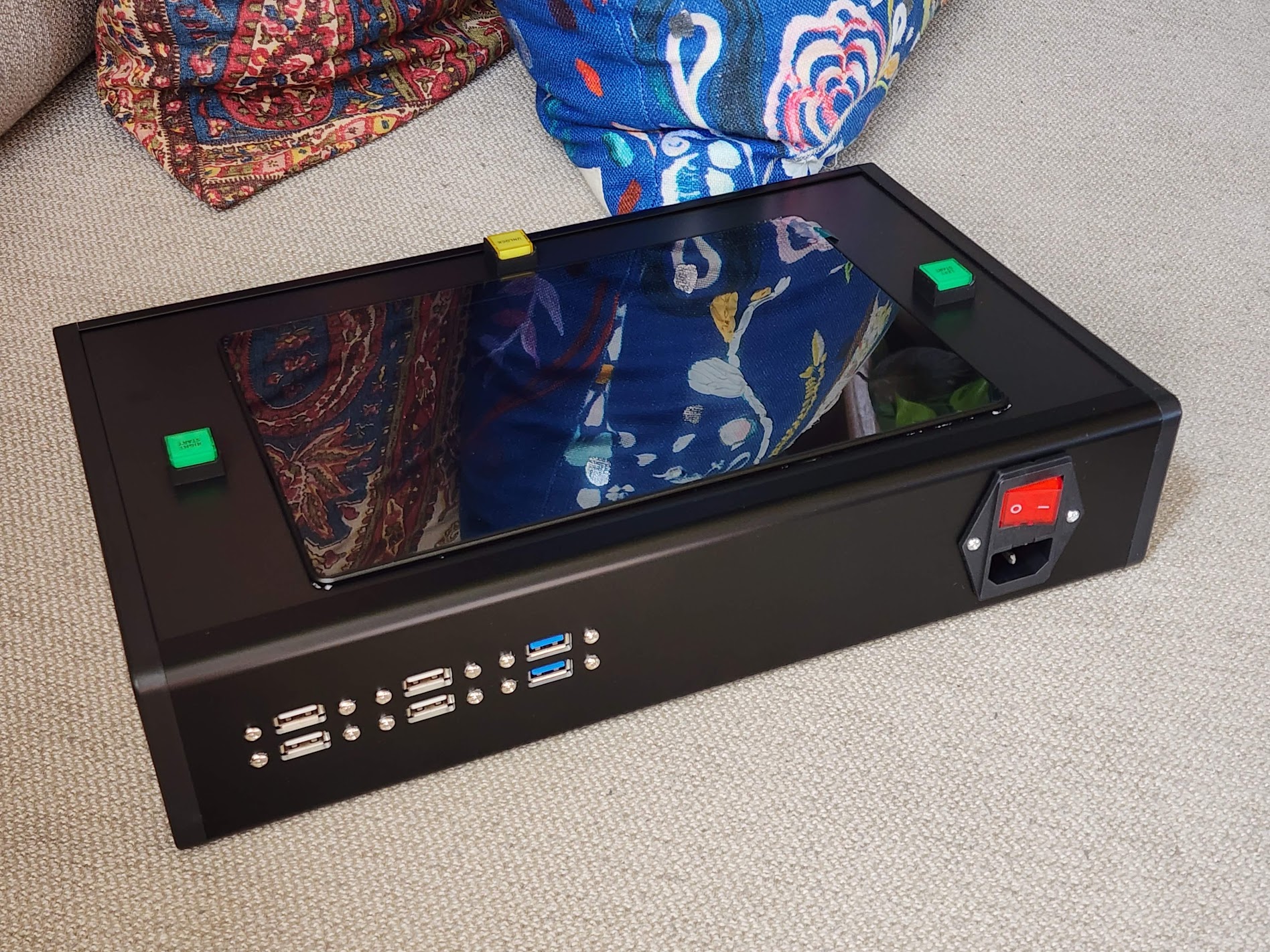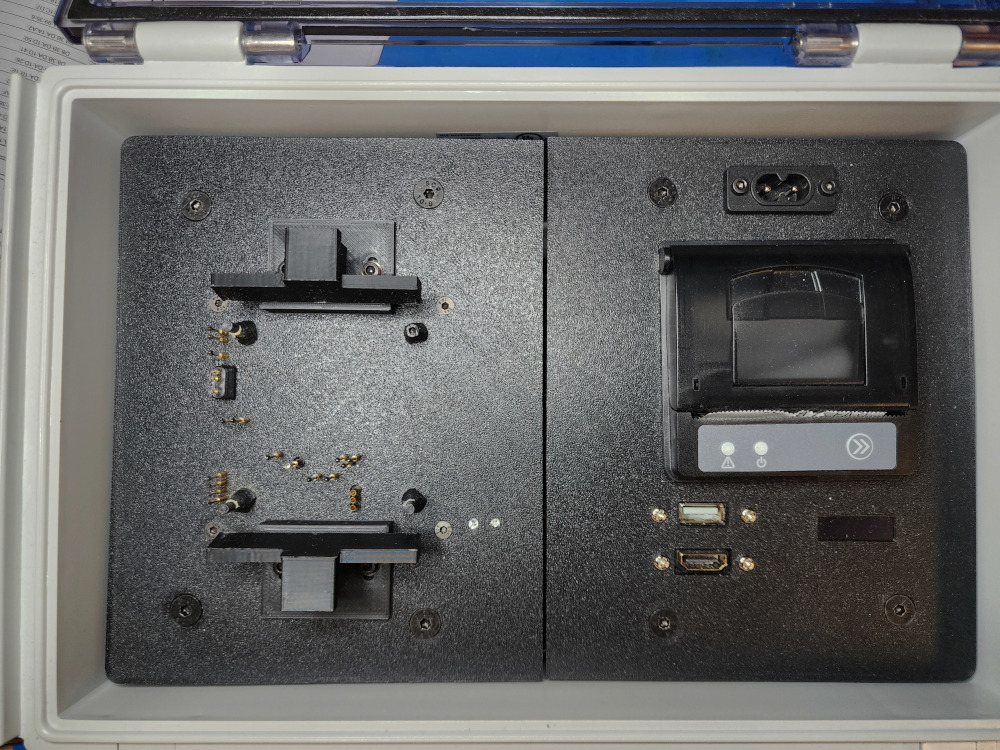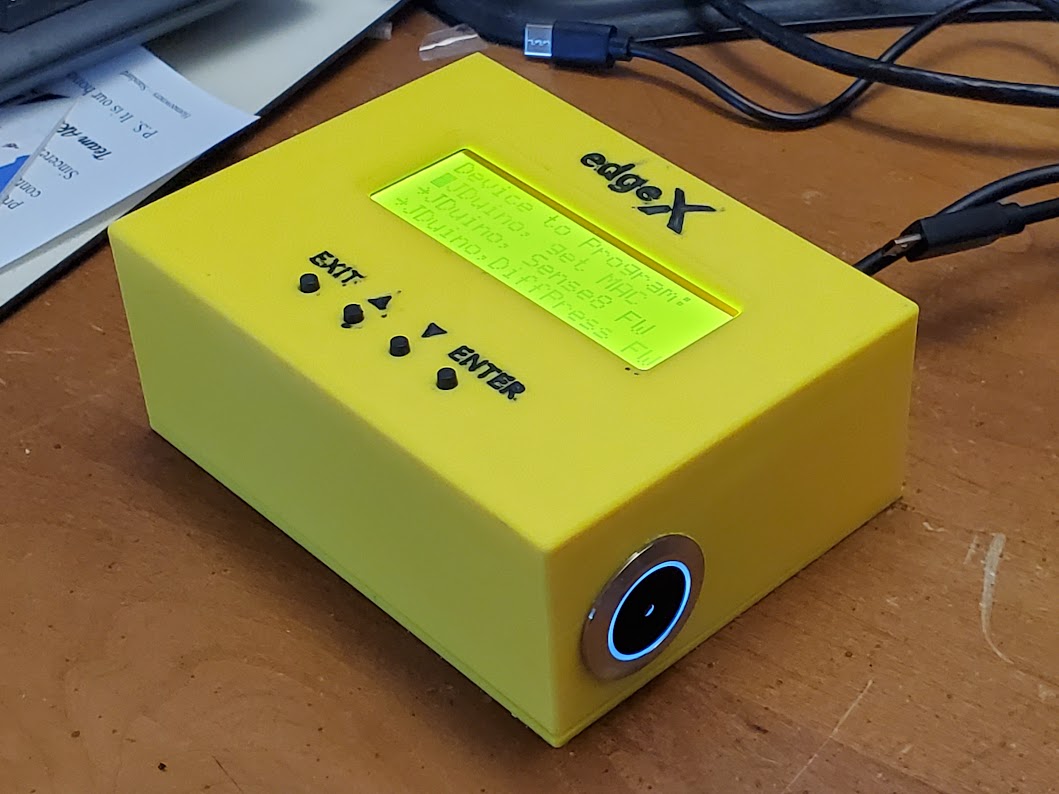

In 2018, I took over a project to build a factory PCBA tester. I hated the form factor: several rack-and-stack instruments, LCD monitor, PC. But the huge and bulky design was already set in stone. Later on we realized that the cable building and manual wiring was tedious and error-prone.
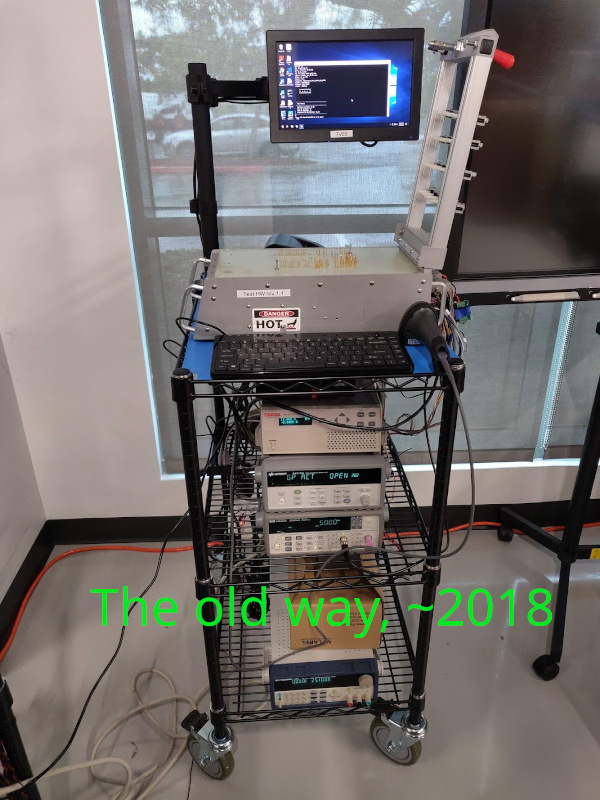
A Compact, Integrated Solution
Earlier in 2026 I got a project to build another PCBA tester and designed it the way I really wanted to: as a completely self-contained, fully integrated system.
The Probe Cartridge System = No Cabling
The spring probe platform is designed like a cartridge where the custom instrumentation board is attached to the PCBA carrier and spring probe plates. Having the probe receptacles solder directly to the instrumentation board removes the messy and tedious cabling between the test fixture and instrumentation.
I designed the instrumentation board to provide power control and measurement, analog and digital IO, USB muxes, and MCU programming. An on-board USB hub means it is all controlled via a single USB interface.
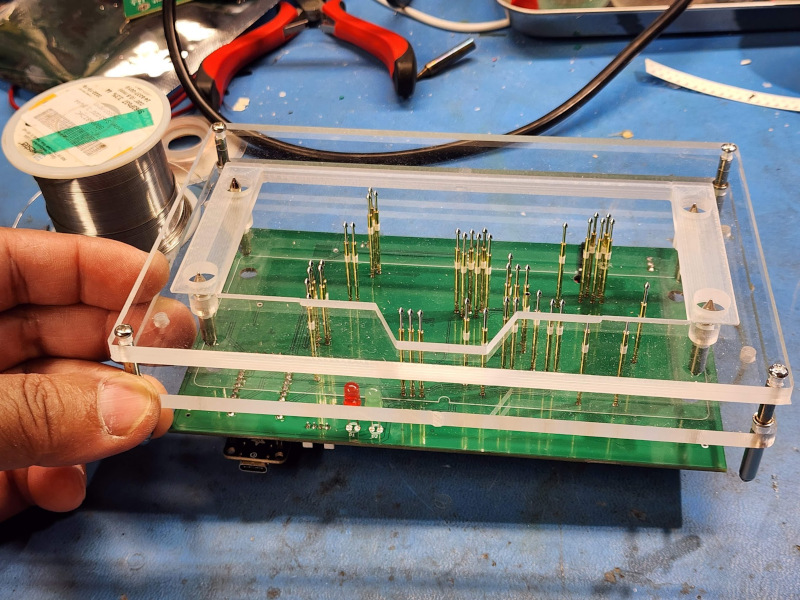
OTS + Custom Design
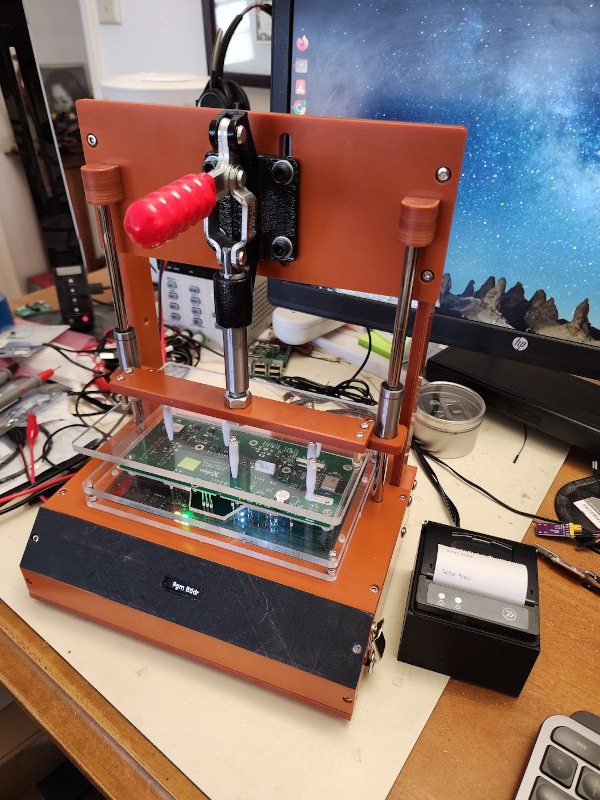
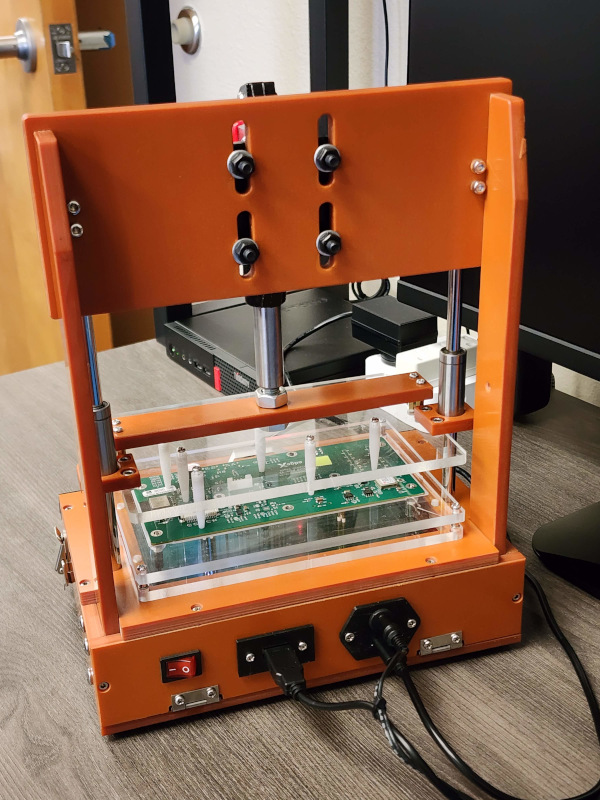
The fixture itself is based on an off-the-shelf, very low cost Bakelite fixture, but with custom machined spring probe and board carrier plates and instrumentation electronics added.
A Raspberry Pi test controller fits easily inside.
A New Skill: CNC
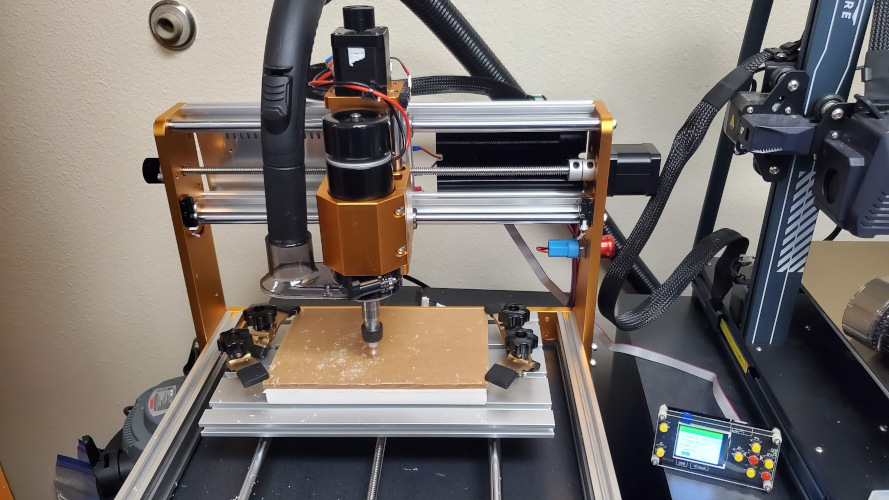
Instead of having the probe plates fabricated, I figured it would be more fun and super useful to learn CNC milling. So now I’ve added a small 2030 and a big 4030 CNC mill to the workshop along with the knowhow to make these custom probe plates.
Lots of Advantages
It may seem like up-front development is a lot for the instrumentation board, but it isn’t that much longer than having to cable and wire up rack-and-stack instruments. And scaling up to many testers is very easy.
Key Advantages
- Easy and inexpensive to scale up
- Small and easy to ship to any EMS in the world
- Automation code is in Python using common open-source libraries
- easier handoff to supporting engineers
- All IO via a single USB connection
- can use any computer (e.g. develop on PC, run on Raspberry Pi)
- AC power via USB Type-C adapter
- room to also fit a small AC supply inside
- OS set to read-only
- no corruption on sudden power loss
- Simple to use
- Load a board: tester senses and starts programming and testing
- Red light=fail, green=pass
- Prints a receipt/traveler
- No buttons to push
Let me know if you need an automated tester for your PCBA factory!